

NearbySpy
7 min read
## Pennsylvania Licensing Requirements and Verification Process
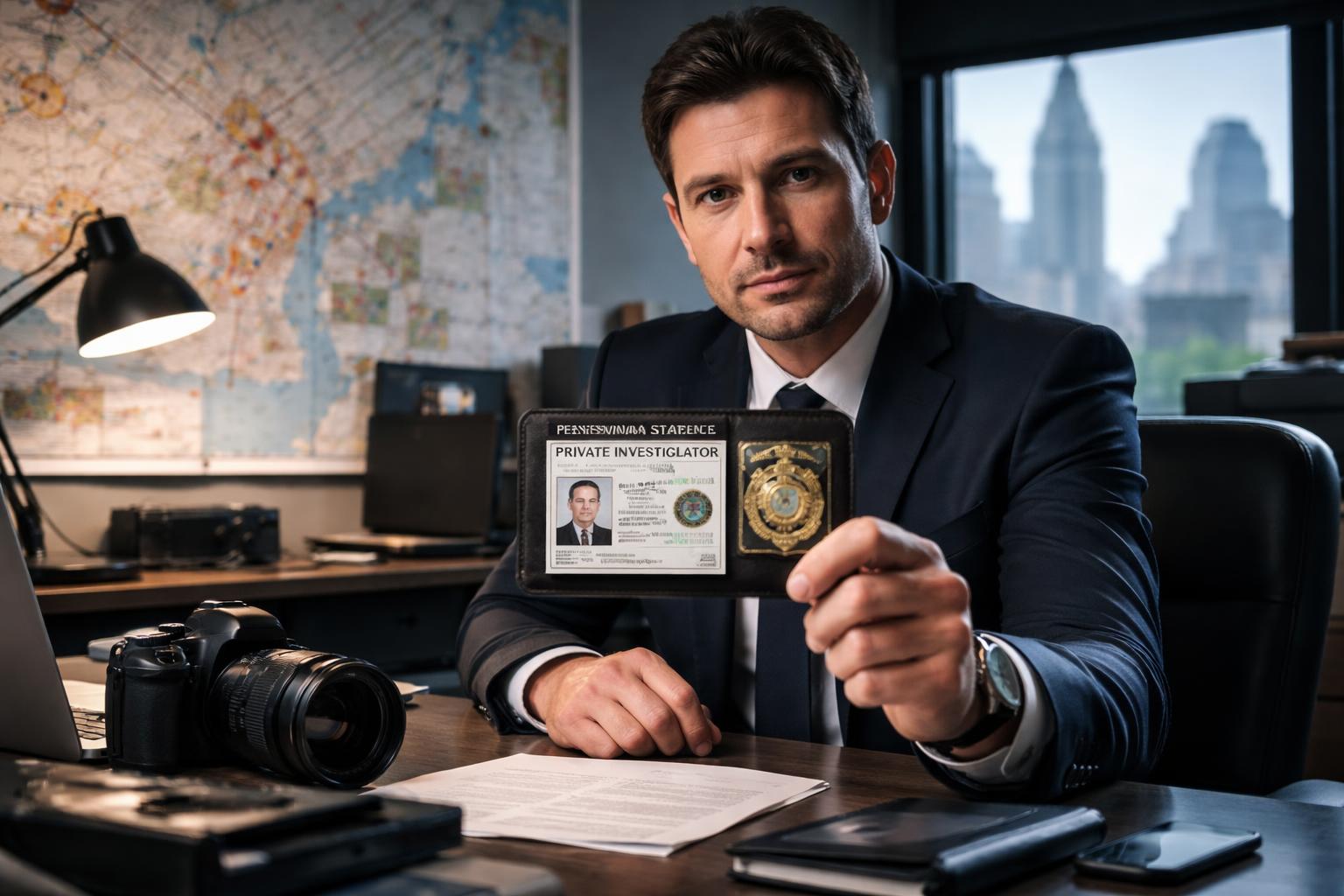
Pennsylvania requires all private investigators to obtain a license through the Pennsylvania State Police before conducting any investigative work. You'll need to verify that any PI you're considering has current licensing with the Commonwealth of Pennsylvania and is bonded in Philadelphia County. This licensing ensures they've met professional standards and legal requirements for operating in the state.
The verification process is straightforward but critical for your protection. You can check a private investigator's license status directly through the Pennsylvania State Police website or by requesting their license number and verification documents. Licensed PIs must display their credentials and provide proof of bonding upon request. Never work with an unlicensed investigator, as this can compromise your case and expose you to legal risks.
When vetting potential investigators, ask about their background and experience beyond just licensing. Many reputable Philadelphia PIs have law enforcement backgrounds or decades of private investigation experience, which adds valuable expertise to complex cases. However, [recent concerns](https://www.theguardian.com/society/2026/jan/11/how-stalkers-outsource-abuse-to-private-investigators) about unethical practices in the industry make proper verification even more essential.
Professional investigators will be transparent about their credentials and happy to provide verification. They should also carry professional liability insurance and adhere to strict confidentiality standards. Before making your [final decision](https://nearbyspy.com/blog/hire-private-investigator-near-you), request references from previous clients and verify their standing with professional associations like the Pennsylvania Association of Licensed Investigators.
## Specialized Investigation Services Available in Philadelphia
Philadelphia's private investigators offer specialized services that go far beyond basic surveillance, addressing the unique challenges you might face in both personal and professional situations. Corporate investigation services help businesses uncover employee fraud, intellectual property theft, and compliance violations that could cost thousands in losses.
Family law investigations represent a significant specialty area, where investigators gather evidence for custody disputes, cohabitation cases, and divorce proceedings. These professionals understand Pennsylvania's specific legal requirements and can provide court-admissible documentation that strengthens your case.
Digital forensics and cyber investigation services have become increasingly crucial as more evidence exists in electronic formats. Philadelphia investigators can recover deleted files, trace online harassment, and analyze digital communications for legal proceedings. Insurance fraud investigation is another specialized field, where investigators work with insurance companies to verify claims and identify fraudulent activities.
Asset searches and judgment recovery services help attorneys and individuals locate hidden assets during divorce settlements or debt collection cases. [Licensed professionals](https://privateinvestigatoredu.org/pennsylvania/) in Pennsylvania also provide skip tracing services to locate missing persons, runaway teenagers, or individuals who've absconded with debts. When you need to [hire a professional](https://www.nearbyspy.com/blog/hire-private-investigator), understanding these specialized services helps you select an investigator whose expertise matches your specific situation, ensuring you receive targeted results rather than generic investigation approaches.

## Cost Breakdown and Pricing Models for Philadelphia Private Investigators
Understanding the cost structure for private investigators in Philadelphia helps you budget effectively and avoid surprises. Most Philadelphia PIs charge between $150-$175 per hour for surveillance work, with a typical five-hour daily minimum. This means you're looking at $750-$875 per day for active surveillance cases.
Background investigations often follow a flat-fee model, with comprehensive checks starting around $100 for basic searches. More detailed investigations involving court records, employment verification, and asset searches can range from $300-$800 depending on complexity. [Professional investigators](https://personalprotectionsolutions.us/blog/how-to-hire-a-private-investigator-in-philadelphia-pa/) typically require a minimum retainer of $1,500 before beginning work on complex cases.
Specialized services carry premium pricing - polygraph examinations cost $400-$500, while corporate fraud investigations may reach $200+ per hour due to the expertise required. Travel time, mileage, and equipment usage often add to base rates. Some firms charge lower hourly rates around $60-$70 for basic research tasks, but surveillance and field work commands higher fees.
When evaluating costs, request detailed breakdowns that separate investigation time from administrative tasks and expenses. Transparent pricing protects both parties and helps you understand exactly what you're paying for. Many [local investigators](https://www.nearbyspy.com/blog/hire-private-investigator-near-you) offer free consultations to discuss your case and provide accurate cost estimates based on your specific needs and timeline requirements.
## Evaluating Experience and Professional Background
You'll want to dig deep into a [private investigator's](https://en.wikipedia.org/wiki/Private_investigator) professional background before making your decision. Start by examining their years of experience in the field - seasoned investigators typically have 10-15 years of hands-on experience handling cases similar to yours. Ask specifically about their background in law enforcement, military service, or corporate security, as these foundations often translate into superior investigative skills.
Professional certifications and ongoing education reveal an investigator's commitment to excellence. Look for credentials from recognized organizations like the National Association of Legal Investigators or specialized training in areas like digital forensics or surveillance techniques. Philadelphia investigators who regularly attend industry conferences and training seminars demonstrate they stay current with evolving investigative methods.
Case specialization matters significantly when evaluating experience. An investigator who primarily handles insurance fraud may not be your best choice for a complex family law matter. You should [ask detailed questions](https://nearbyspy.com/blog/questions-before-hiring-pi) about their specific experience with cases matching your situation - request examples of similar investigations they've completed successfully.
Don't overlook their courtroom experience if your case might require testimony. Investigators who regularly testify as expert witnesses understand legal procedures and can present evidence effectively. Ask about their track record with case outcomes and client satisfaction. A reputable Philadelphia PI will provide references from attorneys, insurance companies, or past clients who can speak to their professionalism and results.

## Legal Boundaries and Ethical Considerations in Pennsylvania
Pennsylvania law strictly defines what private investigators can and cannot do, and understanding these boundaries protects both you and your investigator from legal complications. Licensed PIs cannot trespass on private property, impersonate law enforcement officers, or access confidential records without proper authorization. They also cannot wiretap phones or install surveillance equipment on property they don't own without consent.
Your investigator must operate within the same legal framework as any private citizen when gathering evidence. This means they can observe and photograph activities in public spaces, but they cannot break into homes, hack computers, or use illegal surveillance methods. Any evidence obtained through unlawful means becomes inadmissible in court and could expose you to criminal liability.
Ethical considerations go beyond legal requirements and reflect professional standards within the industry. Reputable investigators refuse cases that involve stalking, harassment, or potentially dangerous situations. They maintain strict confidentiality about your case and won't work for competing parties in the same matter. [Current investigations](https://www.google.com/search?q=time+in+Philadelphia,+PA,+US) must follow established protocols for evidence handling and documentation to ensure court admissibility.
Before hiring any investigator, discuss their ethical guidelines and ask about situations where they would decline a case. Professional PIs should clearly explain what methods they'll use and confirm all activities remain within legal boundaries. They should also provide written agreements outlining the scope of work and ethical standards they follow, giving you confidence that your investigation proceeds responsibly and legally.
## Contract Terms and Evidence Documentation Standards
Your private investigator contract should clearly define the scope of work, payment terms, and deliverable expectations. Look for specific language about what evidence will be collected, how it will be preserved, and the format of your final report. A professional contract includes detailed billing structures, expense policies, and timeline commitments that protect both parties throughout the investigation.
Evidence documentation standards determine the legal value of your investigator's findings. Your PI should follow chain-of-custody protocols, maintain detailed logs of all surveillance activities, and provide timestamped photographic or video evidence. According to [industry standards](https://www.bls.gov/ooh/protective-service/private-detectives-and-investigators.htm), investigators must be prepared to testify in court about their methods and findings, so documentation quality directly impacts case outcomes.
Review contracts for specific clauses about evidence retention, confidentiality agreements, and report formatting. Your investigator should guarantee that all evidence meets Pennsylvania court admissibility requirements and follows proper legal procedures. Understanding these [financial considerations](https://nearbyspy.com/blog/cost-to-hire-private-investigator) helps you budget appropriately while ensuring quality documentation standards.
Insist on detailed progress reports throughout the investigation, not just a final summary. Professional investigators provide regular updates with preliminary findings, photographic evidence, and activity logs. Your contract should specify report delivery timelines, evidence storage duration, and procedures for accessing materials if legal proceedings extend beyond the initial investigation period.
Back to all posts
Published Jan 17, 2026